
How to choose the right high-voltage detector and why have your equipment inspected?
- May 18
- 4 min read
Working with high-voltage equipment requires constant vigilance. Safety cannot be improvised, especially when handling voltages that can reach several hundred thousand volts. Choosing the right high-voltage detector is therefore essential to protect workers and guarantee the reliability of installations. But that's not all: having your equipment regularly inspected is just as crucial to prevent breakdowns and accidents.
In this article, I'll guide you through choosing the right high-voltage detector and explain why inspecting your equipment is essential. I'll use concrete examples of high-performance products such as the AEMC 275HVD detector, the Klein Tools HVNCVT2 non-contact tester, and the Amprobe TIC 300 PRO detector. These tools are industry benchmarks and clearly illustrate the key criteria to consider.
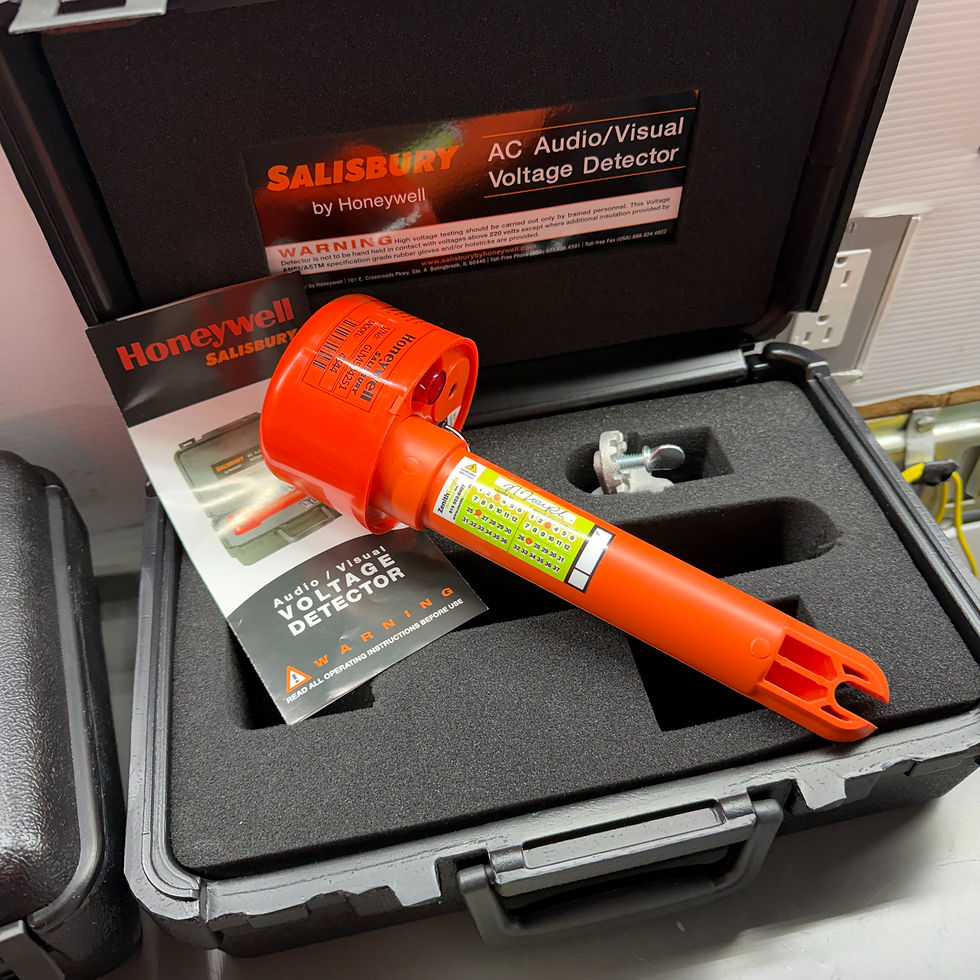
AEMC 275HVD ready-to-use high-voltage detector
Why a high-voltage detector is essential
Working on power lines or in environments where high voltage is present exposes you to serious risks. A high-voltage detector allows you to quickly check if a cable, equipment, or installation is live. This prevents human errors that can be costly or even fatal.
Without a reliable detector, there's a risk of accidentally touching a live component, thinking it's out of service. That's why this tool is the first line of defense for any electrician, line installer, or maintenance technician.
A good detector should be accurate, easy to use, and suitable for the voltage range you are handling. For example, a detector designed for 80 V to 275 kV, such as the AEMC 275HVD, covers a wide range and is suitable for many industrial and power distribution applications.
How to choose your high voltage detector
Choosing a high-voltage detector depends on several criteria. Here are the main points to consider:
1. The voltage range
You need to choose a detector that covers the voltage range of your installations. For example, the AEMC 275HVD detector operates from 80 V to 275 kV, which is ideal for high-voltage lines and industrial equipment.
For applications where non-contact detection is preferred, the Klein Tools HVNCVT2 tester offers a wide non-contact detection range, making it easier to work on cables or equipment that are difficult to access.
2. The type of detection
Some detectors work by direct contact, others without. The choice depends on the situation:
Contact detection : more precise, but requires physical contact with the driver.
Non-contact detection : safer and faster, ideal for checking for the presence of voltage without touching.
The Klein Tools HVNCVT2 is an excellent example of a wide-spectrum non-contact tester, very practical for quick interventions.
3. Robustness and safety
Detectors must be designed to withstand field conditions: shocks, dust, humidity. They must also comply with current electrical safety standards.
The Amprobe TIC 300 PRO detector, for example, is designed for voltages up to 122 kV and offers robustness suitable for demanding industrial environments.
4. Ease of use
A detector should be easy to use, with clear indicators (lights, sounds, digital display). This reduces the risk of errors and speeds up operations.

Amprobe TIC 300 PRO non-contact tester , convenient for quick checks
Why have your high-voltage equipment inspected?
Having a high-performance high-voltage detector is not enough. It is also essential to ensure that all electrical equipment is in good working order. Regular inspections allow you to:
Detect faults before they cause breakdowns or accidents
Ensure compliance with safety standards
Extend the lifespan of equipment
Ensuring uninterrupted business continuity
Inspections must be carried out by qualified professionals, capable of identifying signs of wear, corrosion, or electrical failure.
In our experience, companies that invest in regular inspections significantly reduce the risk of incidents and the costs associated with unplanned shutdowns.
Comparison of three popular high-voltage detectors
To better understand the differences, here is a comparative overview of the three detectors mentioned:
Characteristic | AEMC 275HVD | Klein Tools HVNCVT2 | Amprobe TIC 300 PRO |
Voltage range | 80 V to 275 kV | Broad spectrum contactless | Up to 122 kV |
Detection type | Direct contact | Contactless | Direct contact |
Main use | High-voltage power lines, industry | Quick check, security | Industry, heavy maintenance |
Robustness | Very robust, high standards | Portable, lightweight | Robust, suitable for harsh environments |
Indicators | Visuals and sound | Visuals and sound | Digital and audio display |
Each of these detectors has its advantages. The choice will depend on your specific needs, the nature of your work, and the voltage range to be monitored.

Klein Tools HVNCVT2 detector used for industrial maintenance
Tips for ensuring safety and compliance
Train your teams on the correct use of high-voltage detectors.
Schedule regular inspections for all your electrical equipment.
Use certified equipment that is suited to your needs.
Document all interventions to ensure rigorous follow-up.
Comply with local electrical safety standards .
These good practices help to reduce risks and ensure a safe working environment.
Electrical safety is not something to be taken lightly. Choosing a suitable high-voltage detector and having your equipment regularly inspected are two complementary actions that protect people and installations. By relying on reliable tools like the AEMC 275HVD , the Klein Tools HVNCVT2 , or the Amprobe TIC 300 PRO , you maximize your chances of safety.
Don't wait for an incident to happen. Invest in security and compliance today. Your teams and operations will thank you.
To learn more about protective equipment and inspection services, feel free to consult specialist resources and contact qualified experts.


Comments